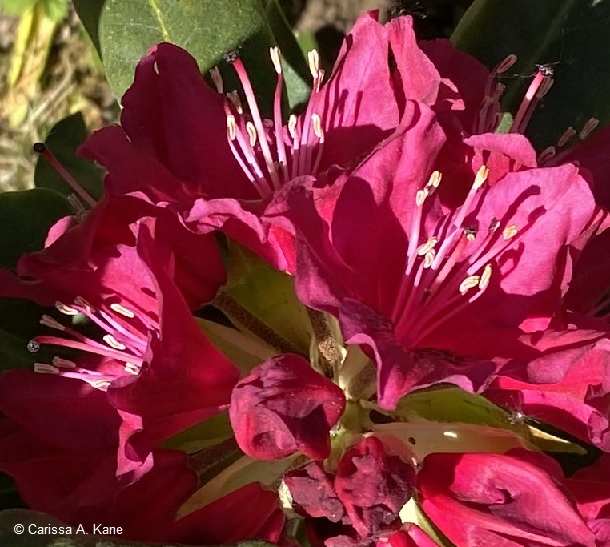
In the perpetual quest So quietly pursued, Rising up and reaching out. Catching to the eye, Inviting to the soul, A symbol and a sign, Whether seen by one or not.
Aspiring to something greater. Ascending from the earth, Leaving worms to worm it out. So simple, yet so not.
Seeking to be found, Finding what is sought, Staying true, ever knowing, Not so much is all that deep. Not so much is lasting.
The earth is crying, Tearing everywhere, Calling out for something real. Not just some trick or worse, Not a passing trend or racket.
And authenticity, if it’s true, Can’t be bought.
May the eyes of your hearts be enlightened, that you may know what is the hope that belongs to God’s call. (Ephesians 1:18)
At the beginning of the Gospel reading for the Second Sunday of Advent (Matthew 3:1-12) there is a description of the “voice crying out in the desert, prepare the way of the Lord, make straight his paths” (verse 3). We read that John the Baptist is outfitted in camel hair clothing and has a “wild” diet of grasshoppers (a.k.a. locusts) and honey. Based solely on this physical description and his location in the desert, it’s easy to envision John as having a gruff or primitive appearance. Yet, there were many people who traveled to be baptized by him. So, what was it that drew them to him?
Imagine someone dressed in clothing made from material that was typically used for making cloaks, tents, and carpets and eating bugs and wild honey telling you to get ready… to straighten up and make a proper path for the Lord. What would you notice first? What would you think? How would you respond?
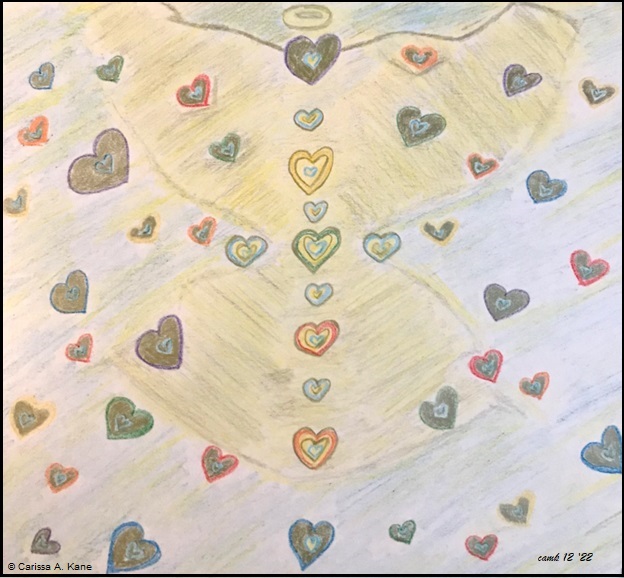
What obstacles are there to looking at the appearance of John the Baptist, and seeing the heart of a faithful servant of God, or a guardian angel pointing out the way?
Oftentimes, we can become conditioned by our surroundings, social circles, and society in general as to how people or things should look, act, or speak. However, these expectations not only make it easier to miss the spirit and the heart of those we encounter along the way, but also make it easier to be misled or go astray. When thinking about preparing, an ideal image or notion of what should be may come to mind, and although it may be helpful to have a sense or an idea about things, it’s important to always leave a little space to prayerfully ponder that which is different, unknown, or unfamiliar.
An Advent Prayer: Lord, in a world that seeks to glorify based on appearances and all that fades, help me to go with Your grain, instead of society’s. Help me to overcome any obstacles that may prevent me from seeing beyond appearances. Help me to look to You and grant me the grace to notice and appreciate the beauty and goodness of all creation, and the heart and soul of those I encounter each day.
John the Baptist appeared, preaching in the desert of Judea and saying, “Repent, for the kingdom of heaven is at hand!” It was of him that the prophet Isaiah had spoken when he said: A voice of one crying out in the desert, Prepare the way of the Lord, make straight his paths. John wore clothing made of camel’s hair and had a leather belt around his waist. His food was locusts and wild honey. At that time Jerusalem, all Judea, and the whole region around the Jordan were going out to him and were being baptized by him in the Jordan River as they acknowledged their sins.
When he saw many of the Pharisees and Sadducees coming to his baptism, he said to them, “You brood of vipers! Who warned you to flee from the coming wrath? Produce good fruit as evidence of your repentance. And do not presume to say to yourselves, ‘We have Abraham as our father.’ For I tell you, God can raise up children to Abraham from these stones. Even now the ax lies at the root of the trees. Therefore every tree that does not bear good fruit will be cut down and thrown into the fire. I am baptizing you with water, for repentance, but the one who is coming after me is mightier than I. I am not worthy to carry his sandals. He will baptize you with the Holy Spirit and fire. His winnowing fan is in his hand. He will clear his threshing floor and gather his wheat into his barn, but the chaff he will burn with unquenchable fire.” – Matthew 3:1-12
Spending the better part of the week surrounded by a plethora of books and various other media, it’s interesting to think about the variety of characteristics held within, as well as characters passing through, a public library.
Looking at the rows upon rows of books that are all around, it’s hard not to be fascinated by the fact that there’s always more to learn. This is not as in a conquest, but rather as in an opportunity, if one is open to it. And even more than that, no matter how vast, neatly ordered, and organized the books and other media may be, the contents of them serve everyone best, only when contemplated and taken into consideration with the range of human experience and love, and the knowledge it imparts into one’s heart.
Frequently viewed as a destination for those searching knowledge, know-how, a place to work, or a group of one sort or another, the library is also a place for those seeking shelter from outside. However, regardless of the time of day or reason for entering, when the library is open, none are turned away. Instead, they are welcome to come in as they are, and become a unique part of the inviting, peaceful environment. Imagine that in a place full of books!
Sometimes we think we know, but until we seek to look beyond the distortions, we honestly cannot.
Have you ever stopped to consider the wide array of fruits and vegetables around the world and the richness in color and nutrients that they offer, not to mention the satisfaction they can bring to one’s palate?
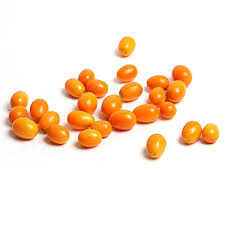
Earlier in the week I had a kumquat for the first time. Not knowing exactly what to expect, I found it to be interesting and surprising in both texture and taste. Its outward appearance (shape, feel and size) was similar to a grape tomato but of a yellow-orange color and more firm. Upon chewing, it was full of a very citrusy flavor like a tangerine only with greater tartness and fewer seeds. The experience was not at all what I thought it might be like—a mild tasting fruit. It was new and very different than anything I had tasted before.
While I have seen kumquats in grocery stores many times, I had never gravitated toward them or been curious enough to try them. In fact, had it not been for the story and the excitement with which an acquaintance offered me one as she explained how she came to buy them, just a day or two before, for the first time herself, they would still be foreign and unknown by me.
Thinking about the experience, it is intriguing how the kumquat, such a little thing originating half way across the world from where I live, could pack such a powerful experience… powerful enough to create a sense of “wow!” and a desire to share the news with others for both my acquaintance and myself.
Perhaps, even more compelling, the fact that the Cantonese name for “kumquat,” pronounced gām-gwāt, means “golden orange” or “golden tangerine.” The name definitely gives an indication of what to expect in terms of citrus flavor and if you see a kumquat tree it looks very much like a tangerine tree, however, in looking at the outside of this little fruit it looks nothing like what a tangerine is supposed to look like. The shape is different, it is smaller (or at least what I had was), and the skin is not peeled. Despite this, the kumquat certainly tastes like a tangerine, and, if what is on the inside truly counts, then that is all that matters.
In everyday life, as we go about our business, we all bear fruit. There are many different ways in which we do so and just as many kinds of fruit. Sometimes we can jump to conclusions, assess people and/or situations, or make assumptions, based on what appears to be rather than looking at what truly is. We must be aware. We must remember substance.
Jesus said to his disciples:
“A good tree does not bear rotten fruit,
nor does a rotten tree bear good fruit.
For every tree is known by its own fruit.
For people do not pick figs from thornbushes,
nor do they gather grapes from brambles.
A good person out of the store of goodness in his heart produces good,
but an evil person out of a store of evil produces evil;
for from the fullness of the heart the mouth speaks.
– Luke 6:43-45



 HopeThatFloats
You must be logged in to post a comment.