Have you ever stopped to consider the wide array of fruits and vegetables around the world and the richness in color and nutrients that they offer, not to mention the satisfaction they can bring to one’s palate?
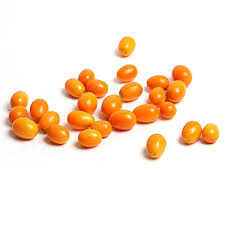
Earlier in the week I had a kumquat for the first time. Not knowing exactly what to expect, I found it to be interesting and surprising in both texture and taste. Its outward appearance (shape, feel and size) was similar to a grape tomato but of a yellow-orange color and more firm. Upon chewing, it was full of a very citrusy flavor like a tangerine only with greater tartness and fewer seeds. The experience was not at all what I thought it might be like—a mild tasting fruit. It was new and very different than anything I had tasted before.
While I have seen kumquats in grocery stores many times, I had never gravitated toward them or been curious enough to try them. In fact, had it not been for the story and the excitement with which an acquaintance offered me one as she explained how she came to buy them, just a day or two before, for the first time herself, they would still be foreign and unknown by me.
Thinking about the experience, it is intriguing how the kumquat, such a little thing originating half way across the world from where I live, could pack such a powerful experience… powerful enough to create a sense of “wow!” and a desire to share the news with others for both my acquaintance and myself.
Perhaps, even more compelling, the fact that the Cantonese name for “kumquat,” pronounced gām-gwāt, means “golden orange” or “golden tangerine.” The name definitely gives an indication of what to expect in terms of citrus flavor and if you see a kumquat tree it looks very much like a tangerine tree, however, in looking at the outside of this little fruit it looks nothing like what a tangerine is supposed to look like. The shape is different, it is smaller (or at least what I had was), and the skin is not peeled. Despite this, the kumquat certainly tastes like a tangerine, and, if what is on the inside truly counts, then that is all that matters.
In everyday life, as we go about our business, we all bear fruit. There are many different ways in which we do so and just as many kinds of fruit. Sometimes we can jump to conclusions, assess people and/or situations, or make assumptions, based on what appears to be rather than looking at what truly is. We must be aware. We must remember substance.
Jesus said to his disciples:
“A good tree does not bear rotten fruit,
nor does a rotten tree bear good fruit.
For every tree is known by its own fruit.
For people do not pick figs from thornbushes,
nor do they gather grapes from brambles.
A good person out of the store of goodness in his heart produces good,
but an evil person out of a store of evil produces evil;
for from the fullness of the heart the mouth speaks.
– Luke 6:43-45
 HopeThatFloats
You must be logged in to post a comment.