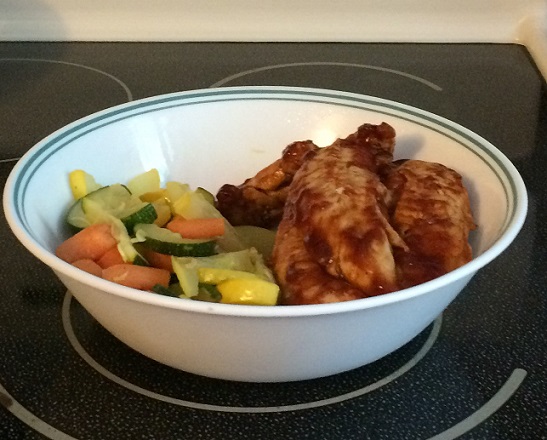
Whenever one of my children asks, “What’s for dinner?,” if I reply, “We’re having leftovers,” the reaction is likely to be one of great disappointment. Initially, I pretty much always find myself surprised by this response, particularly since it seems like we rarely have leftovers for dinner. While the “Leftover” experience is likely typical especially when dealing with certain age groups, it resonates beyond the dinner table. Oftentimes, what is available can be seen as not being good enough.
In the Gospel according to Luke, chapter 9 verses 11-17, we learn that Jesus fed the crowd (all 5,000 people) with five loaves of bread and two fish. It is also written that, “They all ate and were satisfied. And when the leftover fragments were picked up, they filled twelve wicker baskets.” What did they do with the leftovers? And did anyone take issue with whatever was done with them? What was the reaction? What kind of effect did the fact that the baskets contained fragments rather than whole pieces have?
There is no sure fire way to know the answers to these questions for back then. However, they are worth considering in terms of every day life. We all have moments where we either do not appreciate what is in front of us or have trouble accepting and making use of it. Moments where perhaps our response is lackluster or less than gracious. Moments where we can see what we want or what we would prefer to the exclusion of seeing value in what is present or available to us.
Throughout life though, it is not so much about what is on the plate, who is serving, and who is being served as it is about the source of all that. The story of the feeding of the 5,000 is in all four Gospels (Matthew 14:13-21, Mark 6:30-44, Luke 9:10-17, and John 6:1-14). In each passage, Jesus is at the center, providing nourishment for all.
It is important to receive the message that when Jesus is central, not only are the needs of all satisfied, but also there is always more than enough.
 HopeThatFloats
You must be logged in to post a comment.